Navigating the music landscape as a content creator often feels like walking through a legal minefield. A platform gives you permission to generate a track, but a week later, your video gets muted, claimed, or demonetized by YouTube.
The confusion stems from a fundamental misunderstanding: platform rules, commercial licenses, copyright ownership, and automated Content ID systems operate on entirely separate levels. Understanding how these systems interact is the only way to protect your channel, maximize your budget, and legally deploy AI-generated sound.
The Four-Layer Breakdown of Audio Rights
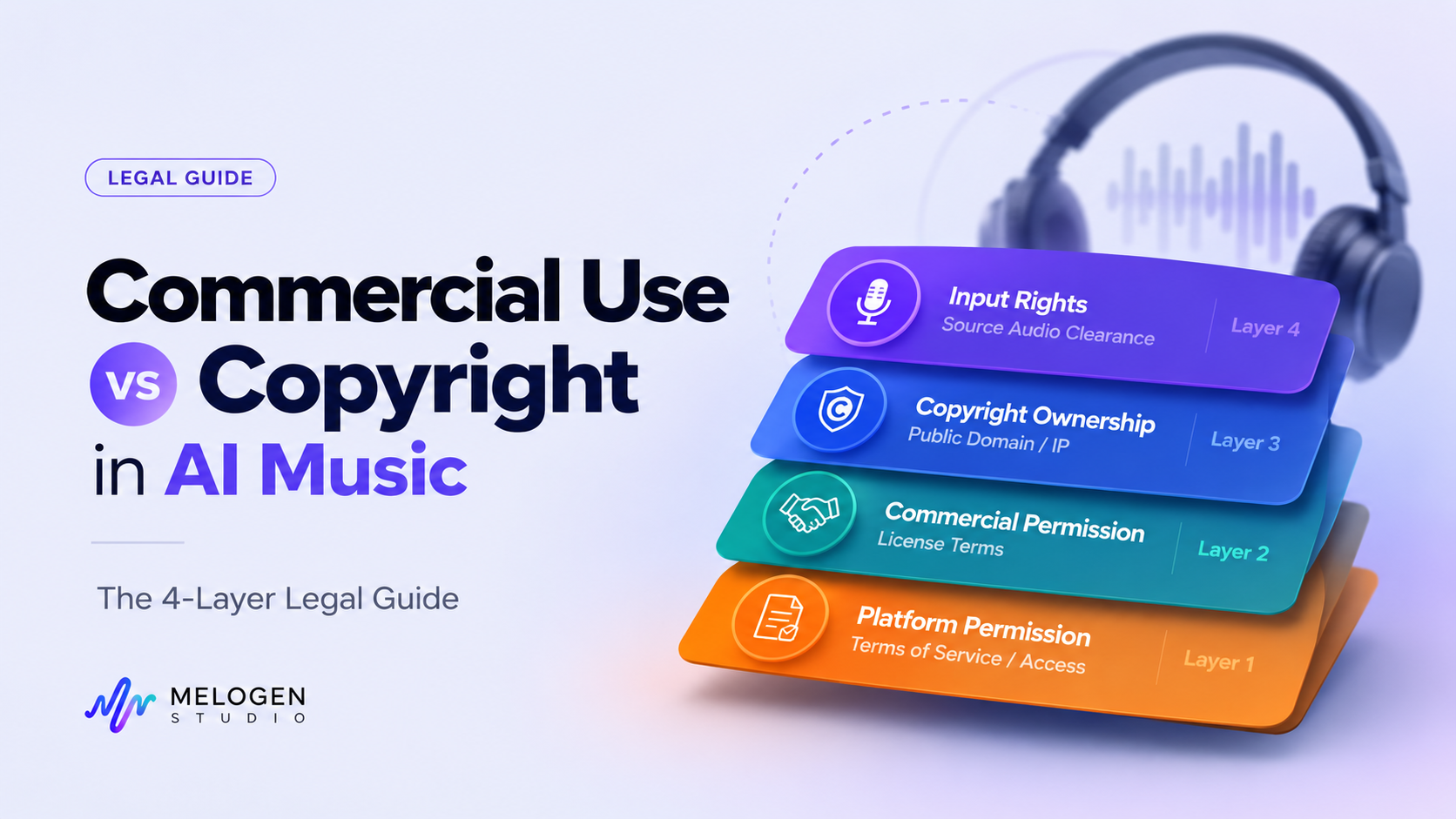
Most copyright issues happen because creators treat music authorization as a single "yes or no" permission. In reality, modern audio rights exist in four distinct, stacked layers.
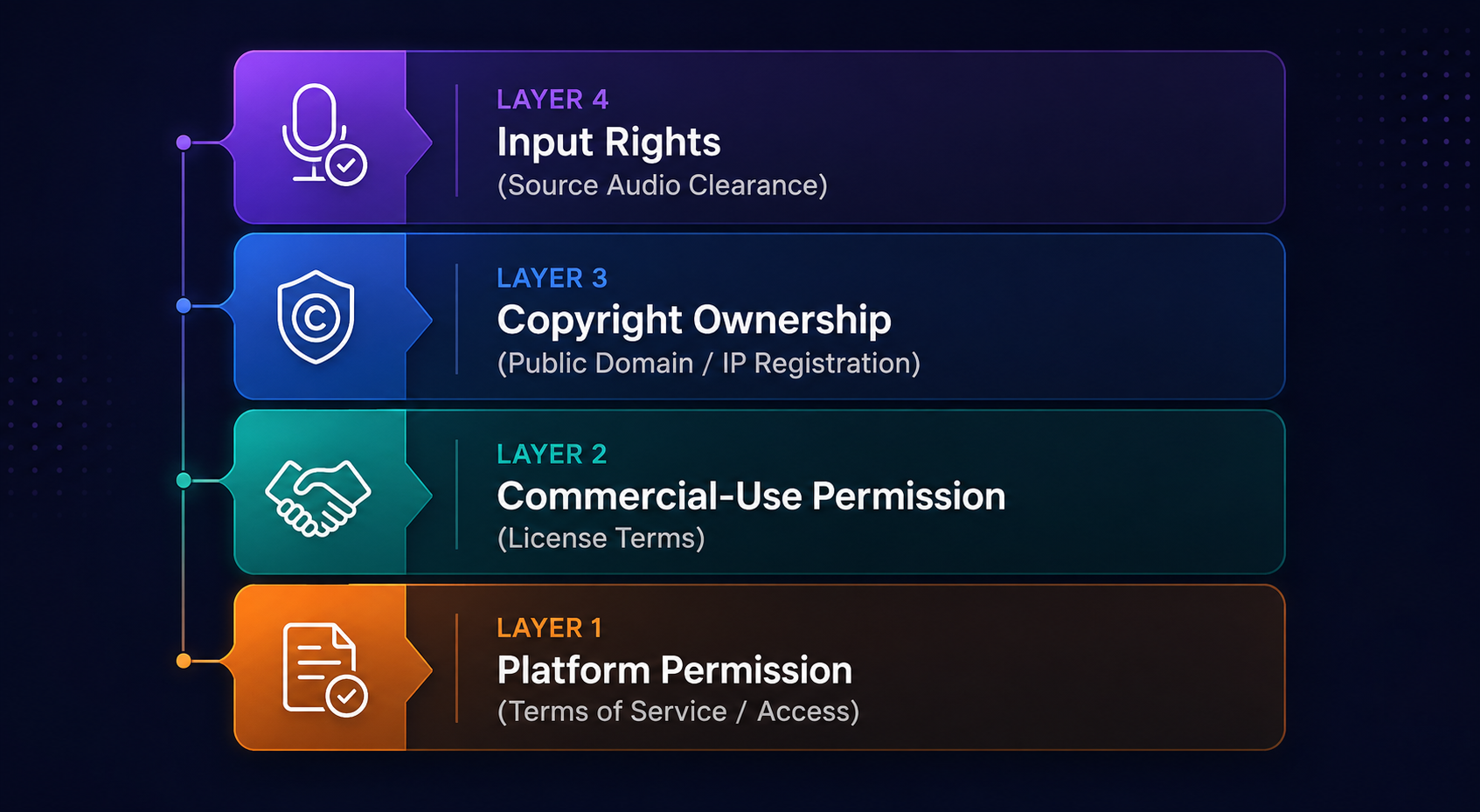
Layer 1: Platform Permission
Platform permission simply means the AI service grants you access to generate, stream, or render audio on their tool. Paying a monthly subscription or consuming generation credits clears your right to use the software, but it does not automatically confer public performance rights, broadcast rights, or copyright ownership over the final file.
Layer 2: Commercial-Use Permission
Commercial permission defines how you can use the output. A commercial-use license allows you to monetize the generated audio in YouTube videos, podcast intro spots, indie games, or paid advertisements without paying recurring performance royalties.
- The Catch: Commercial permission is a contractual agreement between you and the software company—it is not copyright ownership. Even cleared royalty-free music can trigger automated system flags if rogue users mismanage digital rights databases.
Why Royalty-Free Music Still Gets YouTube Claims and Twitch Mutes.
Layer 3: Copyright Ownership
Copyright ownership dictates who holds the actual intellectual property (IP) of the musical composition and master recording. Under current legal frameworks (including guidelines from the U.S. Copyright Office), purely machine-generated output without substantial human modification cannot be registered for traditional copyright protection because copyright requires human authorship.
When an AI engine generates a track from a text prompt, you receive a commercial grant to deploy that audio, but you generally do not own an exclusive copyright over the raw output.
Layer 4: Input Rights (Source Audio Clearance)
Input rights govern the reference files or underlying compositions fed into an AI generator. An output license from an AI generator never clears the rights of your input file.
If you upload a copyrighted pop vocal stem, cover a protected melody, or restyle an existing master track, the generator's commercial terms only cover its synthetic output layer. You remain legally liable for securing the rights to the original source material.
Comparison of Audio Rights Layers
| Rights Layer | What It Grants | What It Does NOT Grant | Real-World Example |
|---|---|---|---|
| 1. Platform Permission | Legal access to process prompts and generate tracks inside the web application. | Broadcast clearance, commercial monetization, or track ownership. | Subscribing to an AI engine lets you hit "Generate." |
| 2. Commercial-Use Permission | The right to run ads, monetize YouTube videos, or ship commercial media with the audio. | Exclusive copyright ownership or underlying source audio clearance. | Using a cleared AI track as background music for a client's commercial. |
| 3. Copyright Ownership | Exclusive legal title to register, license, or sell the master composition. | Protection for unedited, raw machine outputs without human creative input. | Authoring original human lyrics and vocal recordings over an AI track. |
| 4. Input Rights | Authorization to sample, remix, cover, or upload existing recordings. | Automatic clearing of generated outputs if the reference material is unlicensed. | Uploading a copyrighted song stem into a tool to restyle its genre. |
Why Royalty-Free and AI Music Get Hit with YouTube Content ID Claims
Even when using legally cleared AI or royalty-free stock music, creators often encounter automated claims. Here is why it happens:
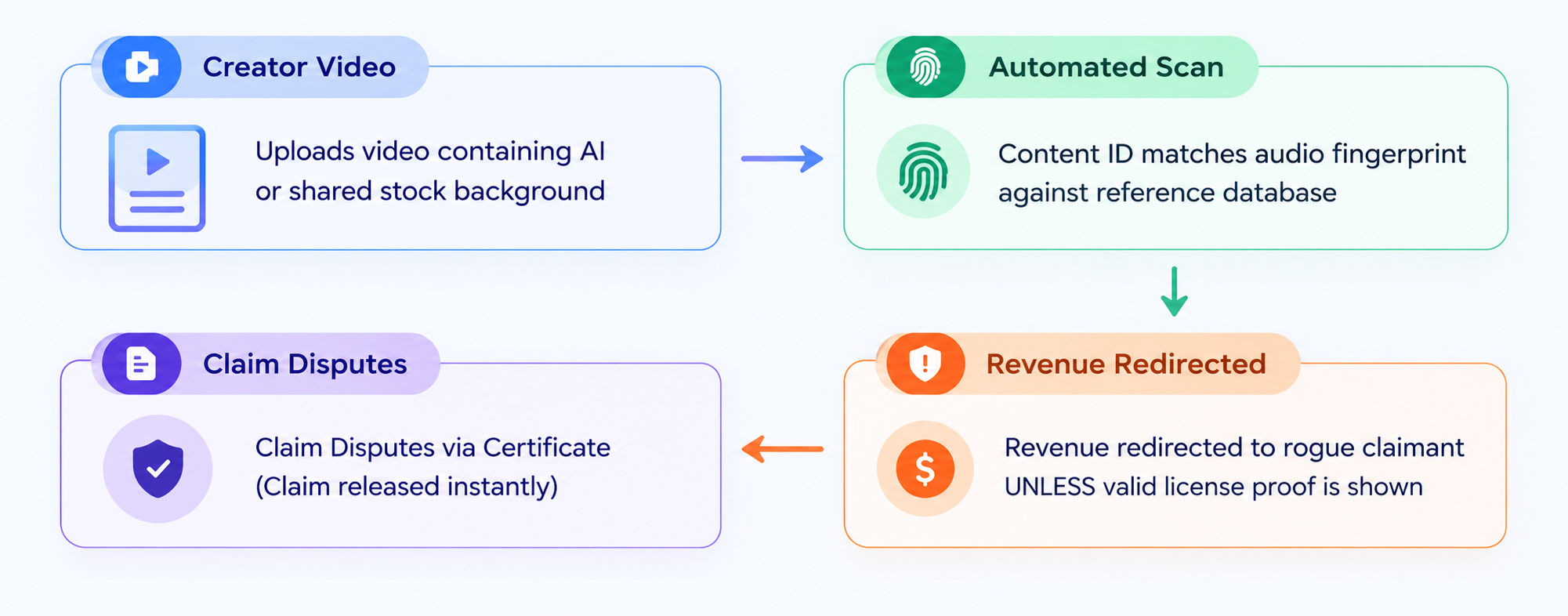
- How YouTube Content ID Works: YouTube’s scanner automatically matches uploaded video audio against a reference database. If a match is found, ad revenue is immediately redirected to the entity that registered the reference file.
- The Rogue Submissions Loophole: Bad actors or misconfigured creators frequently take non-exclusive stock music or open-source AI audio and illegally upload it to open distributors (like DistroKid or TuneCore) while opting into YouTube Content ID.
- The Resulting Claim: When you upload a video containing that same catalog track or open AI audio, YouTube's automated system assumes the rogue uploader owns it exclusively and flags your video.
How Melogen Studio Keeps Your Content Safe and Monetized
Melogen Studio takes a utility-first approach to AI music. Because pure AI music cannot be owned by anyone, we protect creators through contract law, clear commercial terms, and automated dispute resolution mechanisms:
- Machine-Readable License Certificates: Every catalog download and custom AI generation on Melogen Studio includes a downloadable, machine-readable License Certificate. Containing cryptographic SHA-256 audio hashes, user IDs, channel handles, and generation timestamps, it provides ironclad proof during YouTube claim disputes.
- 100% Royalty-Free Commercial Grants: Paid tiers grant perpetual, worldwide commercial synchronization rights. You keep 100% of your YouTube ad revenue, client fees, and monetization.
- Zero Fingerprint Ingestion: Melogen Studio never uploads its audio library to automated DRM databases. If a third party illegally registers a track, submitting your Melogen Studio License Certificate inside YouTube Studio resolves the claim and restores your monetization.
- Exclusive Generation Workflows: For creators needing a signature sound, Melogen Studio offers exclusive generation options that remove generated tracks from catalog re-licensing—eliminating duplicate audio collisions across the web.
Safely Using Melogen Studio's Restyle Track
To keep your projects legally secure when using Restyle Track:
- Use Original or Cleared Inputs: Upload audio you recorded yourself, royalty-free stock stems, or tracks in the public domain.
- Understand the Output License: Melogen Studio grants full commercial rights over the newly synthesized audio track.
- Respect the Source Material: Restyling a copyrighted chart hit does not erase the original songwriter's underlying copyright. Always clear source rights before transforming third-party audio.
For a full breakdown of production overhead, licensing models, and generation pricing across the industry, read our detailed analysis on How Much Does Music Licensing Cost Creators in 2026?